




Blade geometry cutting teeth shaft dimensions and connecting fittings in OEM ODM shaver blades
2026-08-14 16:19:08
Introduction: Structural terms in an OEM/ODM arthroscopic shaver blade describe different physical choices that shape product discussion before compatibility claims.For a product researcher, the main challenge is not memorizing every possible blade option. It is understanding which part of the blade a term points to, what kind of information it can reasonably communicate, and where its meaning stops. Blade geometry, cutting teeth styles, shaft dimensions, and connecting fittings can all appear in OEM/ODM arthroscopic shaver blade discussions, but they do not describe the same design question. Reading them as a parameter anatomy helps prevent one common mistake: treating every customization phrase as a direct promise of performance, universal handpiece compatibility, or a ready-made specification.
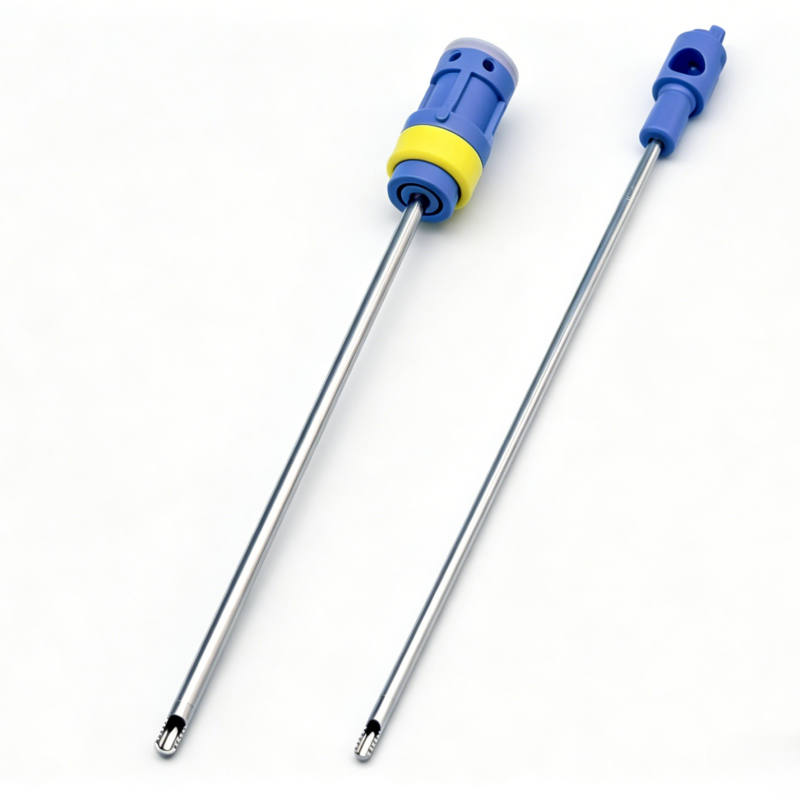
Structural Parameters Come Before Commercial or Compatibility Assumptions
An arthroscopic shaver blade is used within a minimally invasive arthroscopy environment, where instruments work through small access points while the joint is viewed with an arthroscope. Public orthopedic education sources describe arthroscopy as a procedure that uses small incisions and specialized instruments to examine or treat joint conditions. In that environment, a shaver blade is not an isolated cutting object like a general surgical blade. It is part of a powered instrument system, so its useful description depends on the physical relationship among the cutting end, the shaft, and the connection area. That is why OEM/ODM customization terms should first be read as structural vocabulary. Blade geometry describes the form and orientation of the cutting area. Cutting teeth styles describe the edge pattern that participates in tissue removal.
Shaft dimensions describe the long body that must pass through the working path and relate to the handpiece connection. Connecting fittings describe the interface area that allows the blade to work with a handpiece or related powered system. These terms are meaningful because they separate product communication into physical zones rather than mixing every issue into one general word such as “customized.” This distinction also protects the reader from over-reading a product description. A page may identify blade geometry, cutting teeth styles, shaft dimensions, connecting fittings, and specification tweaks as available OEM/ODM directions, but that does not automatically disclose standard sizes, named interface types, compatible brands, default SKUs, or measurable cutting outcomes.
SINOWARES presents OEM/ODM SERVICE in the broader context of minimally invasive surgical instrument structure implementation, while Sinowares Biopsy Needles belongs to the company’s wider minimally invasive device manufacturing background rather than to the shaver blade’s product category. For this article, the important point is structure: what each adjustable area means before it becomes a project-specific specification.
Recommended reading
- 2026-10-15How Cutting Window Configurations Become OEM Blade Specifications
- 2026-10-09Hysteroscopic Shaver Blade Options for Polypectomy and Myomectomy
- 2026-09-14How the SINOWARES Knee, Shoulder, Wrist, and Ankle Wording Sets the Boundary for This Article
- 2026-09-08Knee and shoulder arthroscopy uses for orthopedic shaver blades




 +86 13823386871
 Address