




How the SINOWARES Knee, Shoulder, Wrist, and Ankle Wording Sets the Boundary for This Article
2026-09-14 15:23:38
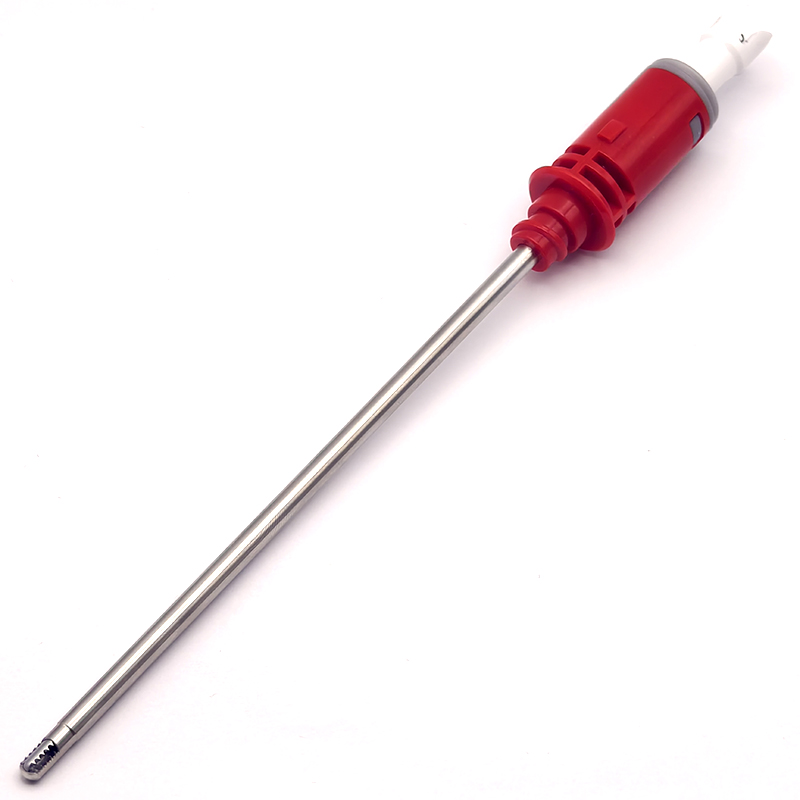
SINOWARES uses the product title “Disposable Arthroscopic Shaver Blade for Orthopedic Surgery” and the subtitle “Orthopedic Shaver Blade for Knee & Shoulder Arthroscopy.” The same product information also makes knee, shoulder, wrist, and ankle visible as arthroscopy-related joint contexts, while describing the blade as single-use, sterile, and connected with soft tissue debridement and meniscus trimming. For this article, the important point is not to expand every visible joint into a full application discussion. Knee and shoulder are the focus because they are named directly in the subtitle and form the main orthopedic shaver blade for knee and shoulder arthroscopy reading task.
 、
、
That boundary prevents two common misreadings. The first is assuming that knee and shoulder are interchangeable from a specification standpoint. They are both arthroscopic settings, but the source information does not confirm separate knee and shoulder SKUs, nor does it confirm one universal SKU for both. The second is using the broader wrist and ankle mentions to build a small-joint conclusion inside a knee and shoulder article. Wrist and ankle can be acknowledged as part of the visible application range, but they deserve separate scope mapping because small-joint arthroscopy raises different assumptions about space, access, and instrument scale. Keeping them out of the main discussion helps this article stay focused on the primary page wording rather than drifting into every possible joint scenario. A practical reading method is to treat application, structure, and proof as three layers. The application layer says the product sits in knee and shoulder arthroscopy contexts. The structure layer includes blade geometry, cutting teeth styles, shaft dimensions, connecting fittings, and sterile packaging options, but the available wording does not provide detailed values. The proof layer would include confirmed model numbers, compatible handpieces, packaging specifications, sterilization method, certificate scope, and labeling. When readers keep these layers separate, the product description becomes more useful: it signals the intended orthopedic arthroscopy category while still leaving technical suitability to documents that must be checked for a specific use or project.
Conclusion
Knee and shoulder arthroscopy are strong application signals for understanding an orthopedic shaver blade, especially when the product is described as a disposable arthroscopic shaver blade for knee and shoulder arthroscopy. They place the blade in a minimally invasive orthopedic instrument context and help explain references to soft tissue debridement and meniscus trimming. They do not, by themselves, prove identical specifications, separate joint-specific models, clinical outcomes, or universal compatibility. Readers can use the SINOWARES product information as a related example of application wording while keeping model, structure, and evidence questions distinct.
FAQ
Q:What does knee and shoulder arthroscopy mean for orthopedic shaver blade use?
A:It means the blade is being described in the context of minimally invasive orthopedic procedures involving the knee and shoulder joints. The phrase helps readers understand the intended arthroscopic instrument environment, but it does not define a specific surgical technique, disease indication, clinical result, or confirmed blade specification.
Q:Does a product page mentioning knee and shoulder confirm separate shaver blade models?
A:No. Mentioning knee and shoulder on a product page confirms application contexts, not separate models. A dedicated knee arthroscopy shaver blade or shoulder arthroscopy shaver blade would need to be supported by a model list, SKU description, specification sheet, or compatibility document that clearly separates those versions.
Q:Can meniscus trimming language be treated as a clinical outcome claim?
A:No. Meniscus trimming language should be treated as a procedural context associated with arthroscopic instrument use, especially in knee arthroscopy. It should not be rewritten as a treatment promise, recovery claim, patient outcome, or evidence that the blade is suitable for every meniscus-related procedure.
Sources / References
Knee Arthroscopy - OrthoInfo - AAOS
Shoulder Arthroscopy - OrthoInfo - AAOS
Related Examples
SINOWARES Disposable Arthroscopic Shaver Blade product pageRecommended reading
- 2026-09-14How the SINOWARES Knee, Shoulder, Wrist, and Ankle Wording Sets the Boundary for This Article
- 2026-09-08Knee and shoulder arthroscopy uses for orthopedic shaver blades
- 2026-08-26Knee and shoulder arthroscopy uses for orthopedic shaver blades
- 2026-08-19Blade Geometry, Cutting Teeth Styles, Shaft Dimensions, and Connecting Fittings Name Different Product Information




 +86 13823386871
 Address