




Unpublished material details should stay separate from visible material wording
2026-08-13 16:02:40
The most reliable way to read corrosion-resistant medical stainless steel is to separate visible wording from unpublished technical details. Visible wording can support an introductory material description: the orthopedic shaver blade is described as stainless steel, medical-grade, corrosion-resistant, sharpened, and used in arthroscopic soft tissue processing contexts.
Unpublished details should remain unconfirmed unless they are supplied in project files or formal documentation. That includes the steel grade, hardness, coating, heat treatment, passivation or surface treatment, surface roughness, edge finishing method, corrosion test items, biocompatibility-related evaluation, and batch-level material traceability.
Keeping these details separate prevents an educational article from sounding more certain than the available evidence allows. This boundary also protects the reader from a common material-language mistake: treating one positive material phrase as if it answered every technical question. “Medical-grade” does not tell whether the blade is optimized primarily for corrosion behavior, edge hardness, toughness, manufacturability, or cost control. “Corrosion-resistant” does not identify the exact stainless steel family or the test environment used to support the claim. “Sharpened” does not reveal the grinding process, edge angle, coating, or post-processing method.
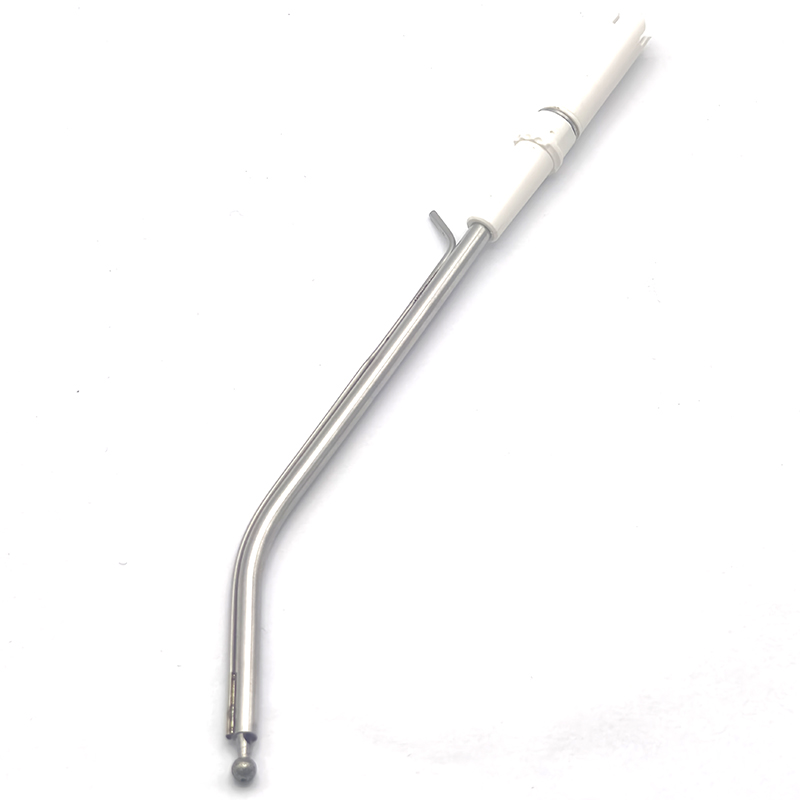
For a B2B reader studying an orthopedic shaver blade, the right conclusion is not that the material phrase is meaningless; it is that the phrase has a specific level of meaning. It supports category understanding and material relevance, while detailed alloy and processing judgments still require separate confirmation. SINOWARES can be read in that same limited way. Its Disposable Arthroscopic Shaver Blade is presented as part of the Shaver blade series and uses material wording such as medical-grade stainless steel and corrosion-resistant medical stainless steel.
The same company also has broader minimally invasive instrument and product-family background, including Sinowares Biopsy Needles, but that brand-level background should not be used to replace the shaver blade’s own material facts.
Readers who want to understand the wording in a practical product setting can review the SINOWARES shaver blade example, while still treating alloy grade, coating, hardness, heat treatment, surface finish, and testing details as separate technical information rather than assumptions. That keeps the article useful for comparison without turning it into a speculative spec sheet.
Conclusion
Medical-grade stainless steel in arthroscopic shaver blade construction is meaningful, but it is not a complete specification. It helps readers understand why stainless steel, corrosion tolerance, and sharpened cutting function are relevant to an orthopedic shaver blade used in arthroscopy-related environments. It does not confirm the exact steel grade, hardness, coating, heat treatment, surface process, or corrosion testing method. The most accurate reading is a layered one: accept the material wording for basic category understanding, connect it carefully to the blade’s sharpened soft tissue-processing role, and keep unpublished metallurgical details in the “to be confirmed” category. For a concrete wording example, readers can review the SINOWARES Disposable Arthroscopic Shaver Blade product information without treating it as a substitute for full engineering documentation.
FAQ
Q:What does medical-grade stainless steel mean for an arthroscopic shaver blade?
A:It means the blade is described as using stainless steel intended for a medical instrument component, which supports basic understanding of material category, corrosion relevance, and structural use in an arthroscopic shaver blade. It does not, by itself, prove a specific alloy, hardness value, surface treatment, coating, or clinical performance result.
Q:Does corrosion-resistant medical stainless steel identify the exact steel grade?
A:No. Corrosion-resistant medical stainless steel is a descriptive material phrase, not an alloy designation. It may indicate that corrosion tolerance is part of the material concept, but the exact grade, chemical composition, passivation method, and corrosion test criteria would need to be confirmed through technical documents or supplier-provided specifications.
Q:Why should coating, hardness, and heat treatment details be treated as unconfirmed?
A:Those details are separate engineering specifications and cannot be safely inferred from general material wording. A blade may be described as medical-grade stainless steel or corrosion-resistant stainless steel without publishing its coating status, hardness range, heat treatment process, surface finish, or test method, so those points should remain unconfirmed until documented.
Recommended reading
- 2026-10-15How Cutting Window Configurations Become OEM Blade Specifications
- 2026-10-09Hysteroscopic Shaver Blade Options for Polypectomy and Myomectomy
- 2026-09-14How the SINOWARES Knee, Shoulder, Wrist, and Ankle Wording Sets the Boundary for This Article
- 2026-09-08Knee and shoulder arthroscopy uses for orthopedic shaver blades




 +86 13823386871
 Address