




How sharpened blade use connects material choice with tissue-processing function
2026-08-12 15:24:43
A sharpened arthroscopic shaver blade is described in relation to soft tissue debridement and meniscus trimming, which helps readers connect the material phrase to the blade’s functional role. The blade must be capable of being formed into a cutting edge and maintaining a geometry suitable for controlled mechanical tissue processing within the device’s intended instrument system. Stainless steel is relevant here because the material must support machining, sharpening, and structural stability in a small medical component.
In simple terms, the material wording helps explain why the blade is not just a passive tube or connector; it is part of a cutting instrument where edge formation and corrosion tolerance both matter. At the same time, this use context should not be converted into a clinical performance promise. “Sharpened blade,” “soft tissue debridement,” and “meniscus trimming” describe the product’s stated operating context and functional category; they do not prove patient outcomes, surgical superiority, reduced trauma, or dependable clinical performance in every case. For material comparison, the safer reading is that the blade’s stainless steel construction must be understood together with its cutting role, but not as evidence of a treatment result.
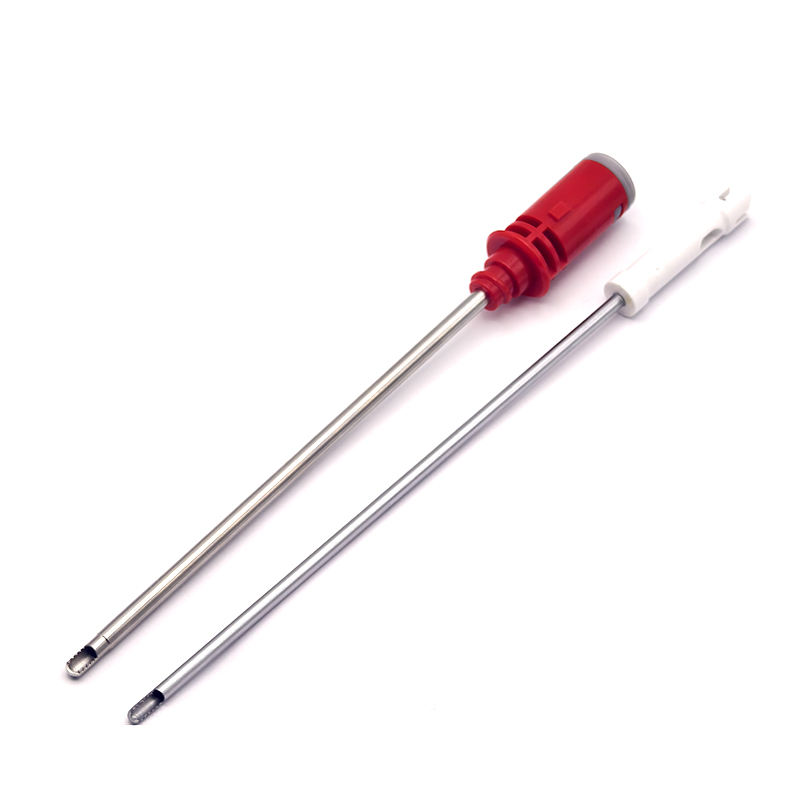
External arthroscopy sources can support the general idea that small instruments are used inside joints, while the product wording can support the presence of a sharpened blade and the named tissue-processing scenarios. Neither type of source should be stretched into proof of exact metallurgy or clinical efficacy. This distinction matters because material language and functional language often sit close together in product descriptions. A corrosion-resistant medical stainless steel arthroscopic shaver blade may sound like a complete specification, but it is still missing the engineering data that would let a reader compare one steel system against another. For example, a harder steel may support certain edge characteristics but can introduce different processing or brittleness considerations; a more corrosion-focused grade may behave differently during sharpening or finishing.
Without the disclosed grade, heat treatment, and surface process, the reader can understand the relationship between material and function only at a concept level. That is still useful, but it is not the same as a validated material comparison.
Recommended reading
- 2026-10-15How Cutting Window Configurations Become OEM Blade Specifications
- 2026-10-09Hysteroscopic Shaver Blade Options for Polypectomy and Myomectomy
- 2026-09-14How the SINOWARES Knee, Shoulder, Wrist, and Ankle Wording Sets the Boundary for This Article
- 2026-09-08Knee and shoulder arthroscopy uses for orthopedic shaver blades




 +86 13823386871
 Address